Showing posts with label Guidance. Show all posts

Thursday, 17 July 2014

Physics

Yup, this is it. Physics


Physics is yet another member of the science family. Renowned for its degree of complexity, this subject is also notorious in O Levels. O Level Physics starts things at an easy level, and later on, takes you to the next level. You could call it a ladder, with uneven spaces between each step, the gap between each step abruptly increasing. However, some of the chapters in between are easy, sometimes consisting of only a few concepts*. The dominant, more complex chapters arise at the end, with daunting concepts that can even make distinguishing your right hand from your left hand difficult. Yes, there are a set of rules that help you find the motion and direction of current in a wire, better known as the 'Fleming' Right/Left Hand Rule'. But don't worry about that, there are subtle ways to learn those as well. Physics will have several definitions, several of which come in the exam as well. It also possesses a wide archive of antiquated formulae each of which have a special use. Yes, they are like magic powers. 

The concepts involved are essential to exam success. Every formula is like a jigsaw piece, a piece that can only fit in a specific place. In other words, not every formula can be applied anywhere. You should know where to apply which formula. Some questions may even require of you to use more than one formula in that instance. 
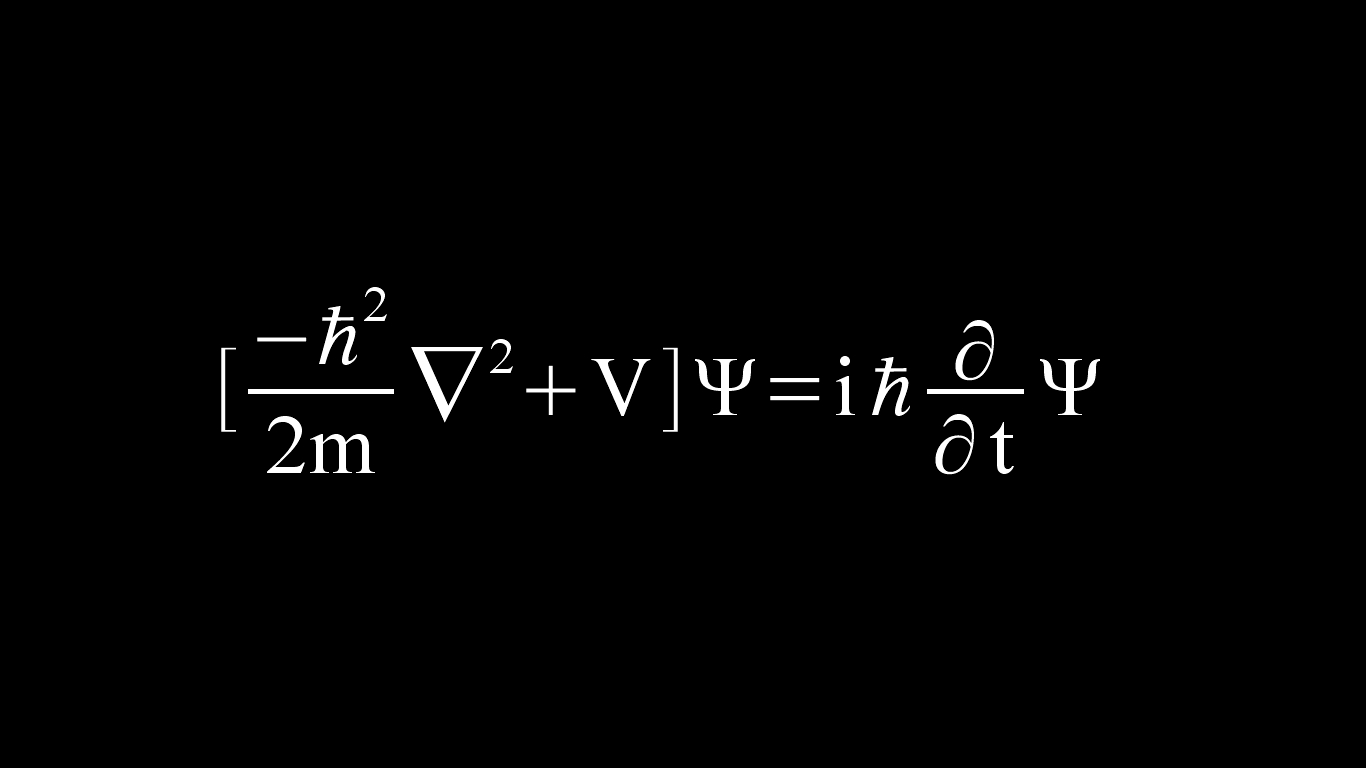
Just an example of a formula!


Towards the last chapters, more and more interlinking concepts arise. You will have to connect the different points together. Pay close attention to the right and left hand rules; where to apply them, and how to apply them, as well as the right hand grip rule, and radioactivity formulae. Magnetism, electromagnetic induction, radioactivity, energy,  and pressure are all promient topics. Revise them properly and solve as many past papers as you can. Remember that past papers are the best way to test your concepts. For physics, to clear concepts, solve as many MCQs as you can. Trust me, they really help. 

I hope this helps you. If it did, then don't forget to share, like, follow, or just leave a comment below. You're feedback really helps me. Thanks


Chemistry


Don’t worry , you won’t anything this complex in O Levels

O Level Chemistry is also a subject among the sciences. It is related to the chemical properties of matter, and consequently may be required if you wish to pursue Medicine or Engineering. Future Computer Engineers don’t really need Chemistry, which along with Business-related fields can make Chemistry an exceptional option. O Level Chemistry is not exactly what could be called ‘Difficult’ but it does require diligent attention and focus. Provided that you are fully aware of all the concepts and have mastered them, getting an A* can be a piece of cake. Now, you might ask why? Well the secret lies in the past papers. O Level Chemistry paper-makers (I don’t have any other term for them) can be called ‘Boring’ in the sense that they often tend to repeat the pattern of questions, and thus you can acquaint yourself with the method of answering

Yeah you could call the Chemistry examiners sort of this


Like I have mentioned in the Biology Guidance Post, you have to clear all of your concepts. Concepts are vital to success in O Levels. In O Level papers, you won’t be accosted by the same questions you were attempting during preparation. New questions will be made, different scenarios will be created, but the concept will still remain there. Pay close attention to all the chapters, especially the chapters ‘Metals’, ‘Organic Chemistry’, ‘Extraction of Metals’, ‘Moles’, and ‘Reactions’. These are the most frequently occurring chapters in the exam. For Metals, make sure to know the property of each of the metals included in the syllabus, as well as their color and their use. Know the differences between the chemical and physical properties of metals and non-metals. For organic Chemistry, pay keen attention to the fractions of oil, properties of alkanes, alkenes, alcohols, esters, and acids. Learn the experiments for each of them, and how to identify them selectively. Don’t forget to learn the conditions for reactions to occur. Learn all of the equations in the ‘Moles’ Chapter, and know when to apply which formula. For this, you will need to practice as many past papers as you can.


I hope this helps you. If it did so, then do help others by sharing this with them, and spreading the word

Sunday, 13 July 2014

Biology

thick-book
What you might except from Biology :p
Biology is a subject included in the sciences. It may be termed as the most “notorious” subject in O Levels, but trust me, it isn’t as hard as it may sound.
Many schools offer Computer Studies as an alternative to Biology to students who are reluctant to engage in this study. If the procession you wish to pursue is Engineering, then my advice to you will be to stay away from Biology. The only reason behind this is that you will have to take ‘Add-Maths’ (Software Engineering students need not take Add-Maths); which along with Biology would be difficult to manage. Nonetheless, it is not impossible. Biology is renowned for its complex terms; terms that often share the same purpose as tongue twisters. In order to master Biology, you will have to go through every chapter in detail, rather than skimming through the seemingly endless array of words. After studying a chapter, make a visit to the Past Papers, and solve questions from there. If you haven’t heard of past papers, then let me explain it to you. Past papers are basically the official papers that candidates have given. They are released after every exam session, along with the results. Yes, you could call them practice papers. Past papers are essential to succeeding in you examination. WHY? Because they give you an idea of the expected questions, along with the proper technique of answering. Now back to Biology; after you have solved the past papers for the topic you have studied, look back on your errors. What is you weak point? Did you not understand a specific concept? If this is the case, then refer to the book again, and go through the chapter until you get a hang of all the concepts. DO NOT RATTAFY ANYTHING. Ratification is the most deadliest disease for the brain, because you are inputting information in your brain, without understanding anything.There will be several definitions; learn them. Study all the diagrams, and draw them. Drawing them make you remember the positions of things even better. Don’t do very deep into things, they ae probably out of the syllabus. Speaking of syllabus, I forgot to add, that when you have finished a chapter, go through the syllabus provided by CIE. You can get this off their website http://www.cie.org.uk The syllabus explains to you what exactly has to be studied. As for the books/ resources, I will post them on a separate topic regarding Resources. I hope this helps you. And don’t forget to like this, follow, and share this amongst your friends. :)